
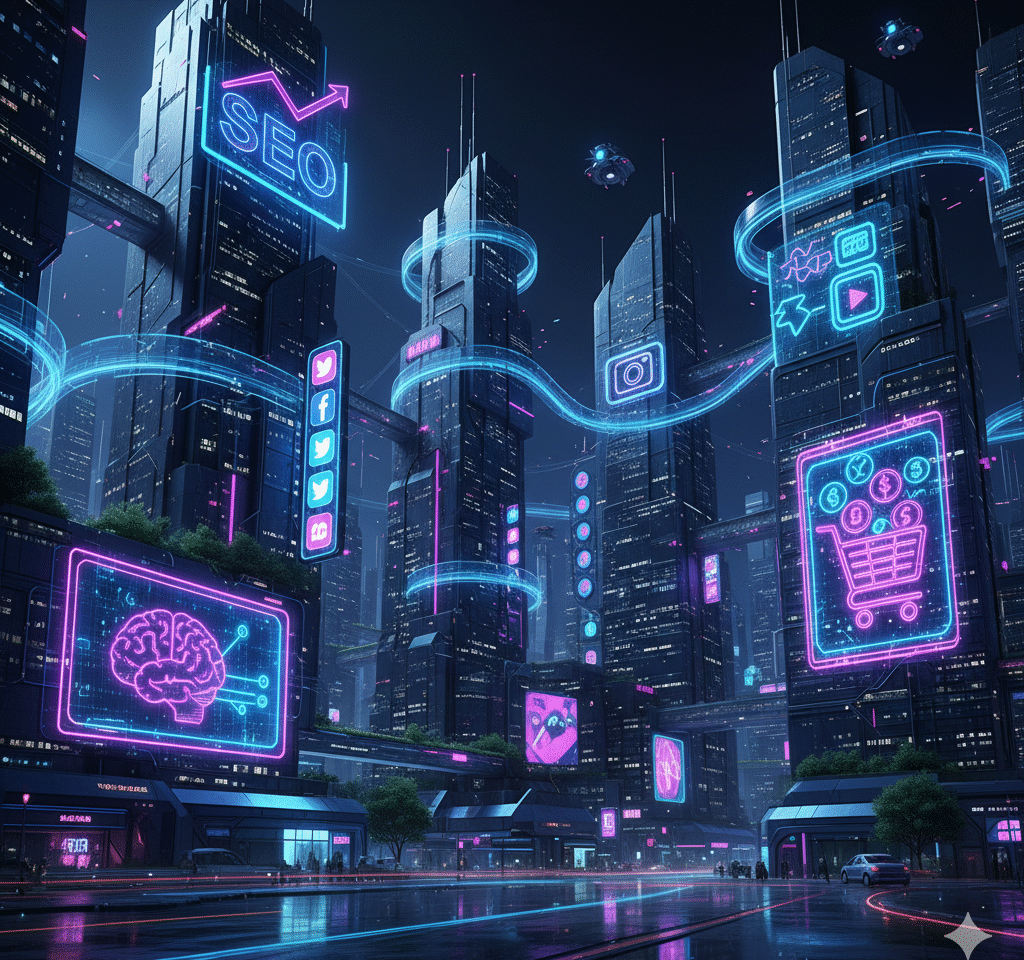
Navigating the Digital Trends: Essential Marketing Trends for 2025
Navigating the Digital Tides: Essential Marketing Trends for 2025
The digital marketing landscape is a dynamic and ever-evolving ecosystem, constantly reshaped by technological advancements and shifting consumer behaviors. To stay ahead, marketers must not only understand current trends but also anticipate future shifts. As we move through 2025, several key digital marketing trends are emerging as pivotal for businesses aiming to connect with their audiences effectively and drive measurable results.
The AI Revolution: Hyper-Personalization and Automation at Scale
Artificial Intelligence (AI) has firmly established itself as the backbone of modern marketing, transforming nearly every strategy from ideation to execution. In 2025, AI is not just about automation; it’s about enabling marketers to deliver deeper, more intelligent interactions with audiences, driving efficiency, creativity, and precision.
- Predictive Analytics and Decisioning: AI tools can forecast customer behavior, anticipate needs, and recommend the most resonant marketing messages. This allows brands to make smarter, data-driven decisions and proactively adjust strategies in real-time.
- AI-Driven Content Creation: Generative AI models are becoming creative partners, assisting in writing blogs, social media posts, ad copy, and email campaigns that feel natural and human. Marketers can scale content production, tailor visuals, and localize services with unprecedented speed.
- Hyper-Personalization: Consumers in 2025 expect tailored interactions. AI enables hyper-personalization by processing vast datasets, including browsing history, demographics, and real-time behavioral signals, to deliver ultra-customized content and offers across every touchpoint. This approach fosters stronger emotional connections and brand loyalty.
- AI Agents and Chatbots: Intelligent software systems and AI-driven chatbots provide 24/7 customer service, generate leads, nurture relationships, and resolve issues proactively, cutting workloads and improving response speed.
While AI offers exciting possibilities, the balance between automation and human creativity remains crucial. Marketers are focusing on using AI to automate administrative tasks and enhance insights, while human creativity drives strategic direction and ensures content aligns with brand sentiment and unique perspectives.
Prioritizing Privacy: The First-Party Data Imperative
With increasing consumer awareness about data privacy and the ongoing deprecation of third-party cookies, a privacy-first approach to marketing is no longer optional but a necessity. By 2025, 85% of the world’s population will have its personal data covered under modern privacy regulations. This shift mandates a greater focus on transparency, user consent, and the strategic collection and utilization of first-party and zero-party data.
- The End of Third-Party Cookies: Although Google reversed its plan to fully deprecate third-party cookies in 2024, the intention has driven marketers to seek more sustainable and privacy-safe solutions.
- First-Party and Zero-Party Data: Brands are increasingly prioritizing data collected directly from users (first-party data) or proactively provided by them (zero-party data). This not only aligns with privacy laws but also offers better control and accuracy for personalization.
- Transparency and Consent: Consumers demand to know how their data is used and expect explicit permission for collection. Brands that provide clear, accessible privacy policies and give users control over their data build trust and enhance their reputation.
Privacy-first marketing focuses on building trust and delivering personalized experiences while respecting user consent, making it a competitive edge in 2025.
Short-Form Video: Engaging and Shoppable Content Reigns
Short-form video content continues its reign as a dominant force in digital marketing. Platforms like TikTok, Instagram Reels, and YouTube Shorts have transformed how users consume content and how brands engage with their audiences.
- High Engagement and Shareability: Videos typically lasting between 15 and 60 seconds are highly shareable and more likely to go viral, capturing attention in a world of shrinking attention spans.
- Authenticity Over Perfection: Audiences resonate most with raw, authentic, and behind-the-scenes content that feels human and relatable. Brands are encouraged to let go of highly polished productions in favor of genuine storytelling.
- Interactive and Shoppable Videos: 2025 is seeing a rise in interactive features like polls, quizzes, and shoppable links embedded directly into short videos, creating seamless entertainment and shopping experiences.
- Hyper-Personalized Short Videos: AI-driven tools are being used to tailor short videos to individual user interests, locations, and behaviors, creating highly relevant content that drives engagement and conversions.
Short-form video is not just a trend; it’s the foundation of digital storytelling in 2025, offering immense potential for brand awareness and direct sales.
Evolving Influencer Marketing: Authenticity and ROI
The influencer marketing landscape is evolving, moving from a focus on high-profile celebrities to more authentic, performance-driven partnerships. The creator economy continues to grow, with brands tapping into influencers to drive engagement and amplify visibility.
- Rise of Micro and Nano-Influencers: Brands are increasingly collaborating with micro and nano-influencers who have smaller but highly engaged and loyal niche audiences. These collaborations often offer better ROI and higher audience interaction compared to celebrity endorsements.
- User-Generated Content (UGC) and Customer Collaboration: There’s a growing emphasis on content created by customers themselves, often in collaboration with brands. This type of content feels more credible and authentic, fostering trust.
- Performance-Driven Partnerships: The industry is shifting towards models where influencers are compensated based on measurable impact, such as commissions rather than flat fees, aligning creator incentives with brand goals.
- AI-Enhanced Collaboration: AI tools are optimizing influencer selection, campaign management, and performance analysis, allowing brands to identify influencers with true resonance and automate processes for better ROI tracking.
In 2025, successful influencer marketing strategies will prioritize building long-term relationships with relatable creators and leveraging data to optimize campaigns for measurable results.
Sustainable and Purpose-Driven Marketing: A Values-First Approach
Consumers, particularly millennials and Gen Z, are increasingly conscious of the environmental and social impact of their purchasing decisions. In 2025, sustainable marketing is no longer a “nice-to-have” but a necessity for brands to thrive.
- Eco-Branding with Transparency: Brands are expected to “walk the walk” when it comes to sustainability, providing clear information on sourcing, packaging, and carbon footprint reduction. Certifications and radical transparency are key to building trust.
- Circular Economy Principles: Marketing efforts are highlighting initiatives that reduce, reuse, and recycle resources, such as take-back schemes and subscription models over traditional ownership.
- Purpose-Driven Storytelling: Consumers want to engage with businesses that have a purpose beyond just selling products. Brands aligning with social and environmental causes and communicating these commitments authentically will resonate more deeply.
- Green Tech and Digital Tools: AI-powered efficiency in production and waste reduction, along with blockchain for verifying ethical sourcing, are contributing to greener marketing practices.
Integrating sustainability as a core brand identity and a Key Performance Indicator (KPI) will be crucial for attracting and retaining eco-conscious consumers in 2025.
The Shifting Landscape of Search: Beyond Traditional SEO
Search marketing continues to evolve rapidly, moving beyond conventional text-based queries to encompass new modalities driven by AI and changing user habits.
- Voice Search Optimization: As smart speakers and AI voice assistants become more prevalent, optimizing content for spoken queries and natural language patterns is critical. Voice commerce is predicted to reach $80 billion by 2025.
- Generative Engine Optimization (GEO): With the rise of generative AI in search, marketers need to adapt content strategies to keep up with evolving search algorithms and ensure visibility in AI-powered search results.
- Visual Search Integration: Emerging visual search technologies are processing billions of queries monthly, allowing users to find information using images. Brands need to consider how their visual content is optimized for these platforms.
- Social Search: Social media platforms are becoming significant search engines in their own right, especially for younger demographics, highlighting the importance of discoverability within these channels.
Marketers must broaden their understanding of “search” and develop comprehensive strategies that account for these diverse and AI-driven search behaviors.
Conclusion: Adaptability is Key in 2025
The digital marketing world in 2025 is smarter, faster, and more human-centric than ever before. AI and automation drive efficiency, but empathy and authentic storytelling build loyalty. Businesses that can seamlessly blend technological innovation with a deep understanding of human values will be the true winners of this new digital age. Adaptability, a willingness to embrace new tools, and a steadfast commitment to customer-centricity are essential for navigating these exciting and transformative trends.



No comments
Be the first to comment.